

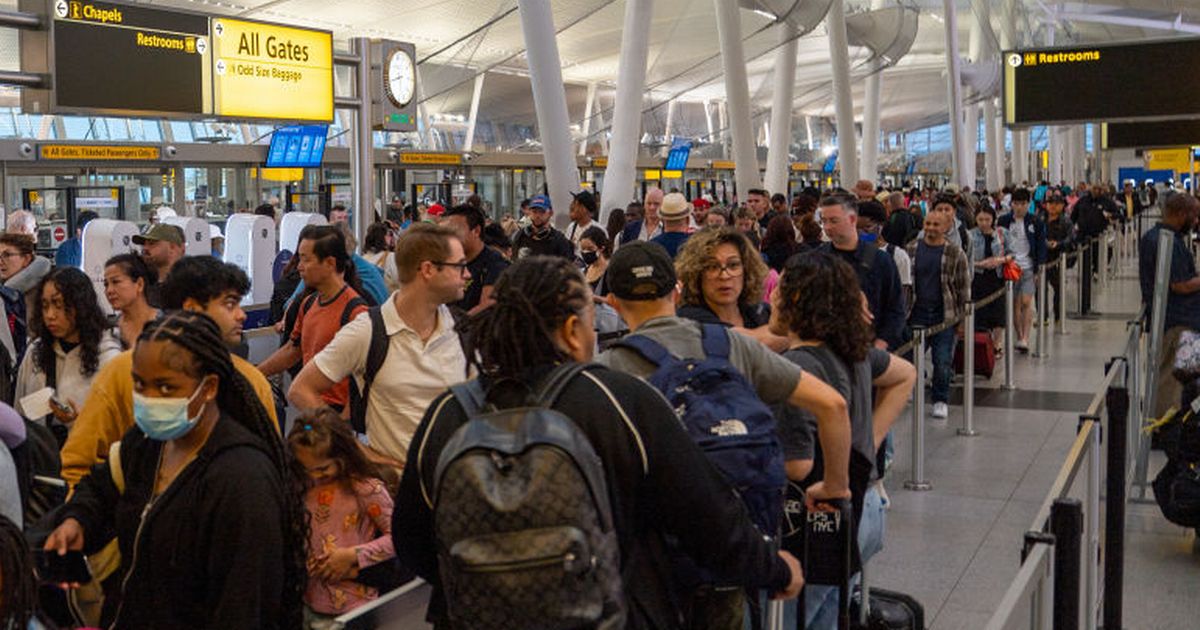
A computer glitch has caused major disruptions for thousands of passengers this week, leading to flight delays and cancellations. The issue, which started on Monday (August 28), forced air traffic controllers to manually input flight plans, resulting in chaos at all major UK airports.
Transport Secretary Mark Harper has called it the worst incident of its kind in nearly a decade and has announced an independent review will be conducted. The faulty air traffic control system in the UK was identified as the cause of the problem at 8.30am at the beginning of the week.
In order to prevent air traffic controllers from receiving false and potentially dangerous information, the system switched to its backup mode. Martin Rolfe, chief executive of National Air Traffic Services, explained the airport chaos in an interview with The Independent.
He described the initial crisis and the efforts made to restore the system, stating: “We were working on a timeline to restore the system before 12.30[pm]… We knew that if we hadn’t resolved it by that point, we would have to significantly reduce the flow of aircraft to avoid overwhelming the system and, more importantly, the controllers.
“Around halfway through that process, we realized there was a reasonable chance that we might not be able to fix it within the given timeframe. The problem was unlike anything we had encountered before…”
Manually entering data is an extremely rare occurrence for air traffic control (ATC), but that’s exactly what happened earlier this week.
However, Rolfe stated: “The engineers managed to identify the problem and determine how to fix it. By 1.30[pm], there was news from the engineers that they believed they knew how to effectively recover the system, even though they hadn’t identified the root cause.”
Subscribe here for the latest news where you live
Within an hour, the ATC system was back up and running, but as Rolfe explained, “you don’t go from 10 percent to 100 percent in a moment.” Consequently, passengers are now experiencing the repercussions of the delays, with thousands of flights being cancelled and approximately 250,000 travelers grounded.
Rolfe emphasized that passenger safety was never compromised and that the delays were necessary to prioritize safety.